
Adverse Possession: How It Really Works & What You Need to Know
Adverse Possession: The Real Estate Law Most People Don't Understand
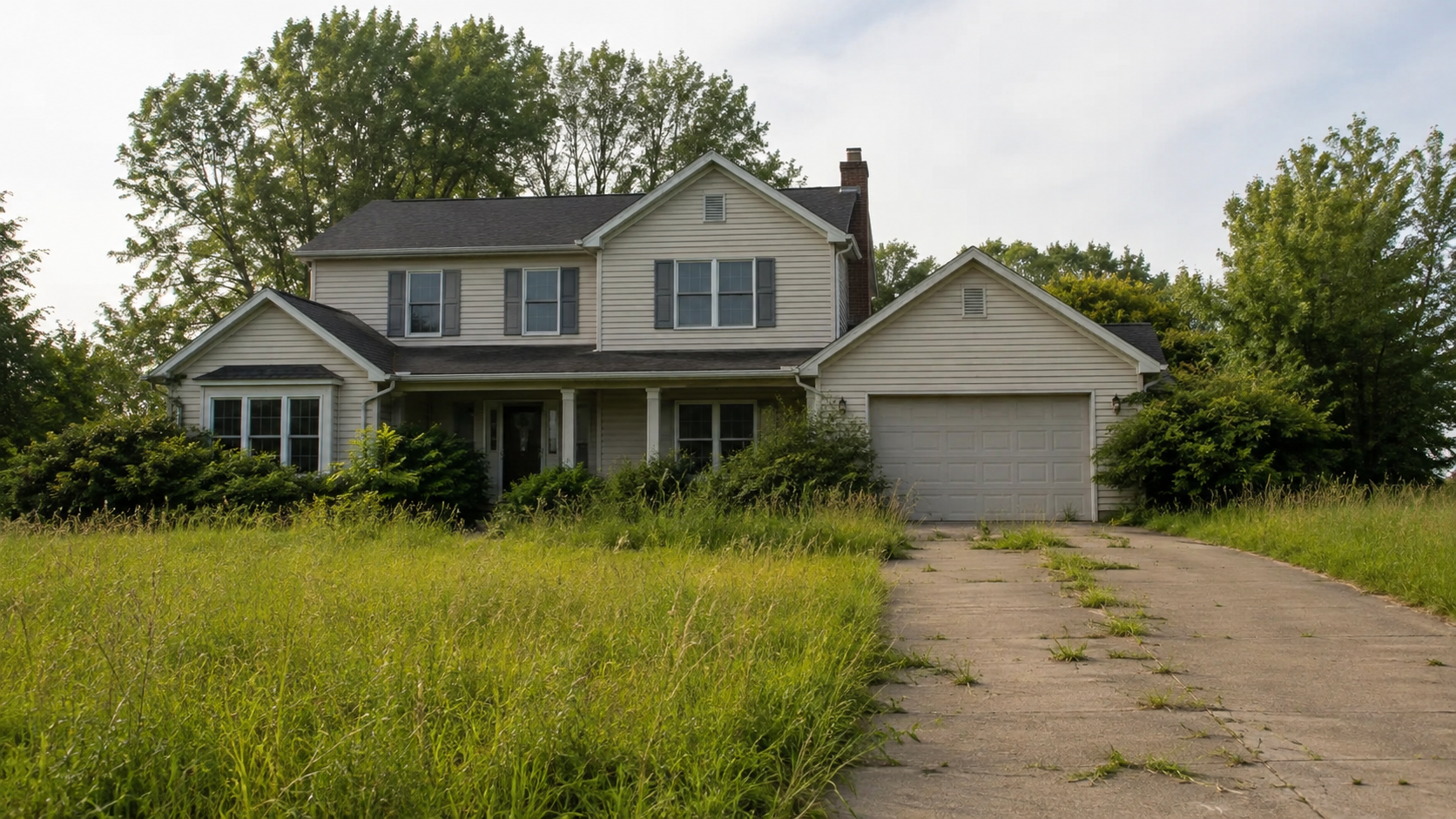
There are probably properties in your city that you've driven past hundreds of times.
Some sit empty.
Some are maintained just enough that nobody pays attention to them.
Some have been tied up in probate for years.
Some have owners who moved away decades ago.
Others may look perfectly normal from the street while the ownership history behind them is a complete mess.
Most people see a piece of real estate and think one thing:
Who owns it?
When I started studying adverse possession, I learned that property law sometimes requires you to ask a much deeper question:
Who has the legally superior right to it?
Those are not always the same question.
And that distinction is where the entire subject of adverse possession begins.
Adverse Possession Sounds Illegal Until You Understand Property Law
The first time most people hear about adverse possession, their reaction is predictable.
"So you're telling me somebody can just take somebody else's property?"
No.
And that misunderstanding is exactly why so much bad information exists around this subject.
Adverse possession is not:
finding an empty house and declaring it yours;
filing one magical document at the courthouse;
breaking into property;
calling yourself an "adverse possessor";
or moving into a property and waiting until ownership automatically changes.
That's internet mythology.
Adverse possession is a legal doctrine involving possession, time, conduct, notice, evidence, and specific requirements imposed by the law of the state where the property is located.
The basic doctrine has existed for generations.
What changes is how each state applies it.
That difference matters.
A lot.
What Is Adverse Possession?
Generally speaking, adverse possession allows someone who possesses land in a legally qualifying manner for the required statutory period to potentially establish ownership rights in that property.
Most states look for some combination of possession that is:
Actual
You are actually possessing or exercising control over the property.
Open and Notorious
Your possession isn't being secretly concealed.
Exclusive
You are exercising the type of possession ordinarily associated with ownership rather than casually sharing possession with everyone else.
Hostile or Adverse
This does not mean angry, violent or confrontational.
In property law, "hostile" generally concerns possession existing without the record owner's permission and under a claim inconsistent with the owner's right of possession.
Continuous
The legally required possession has to continue for the statutory period applicable to the claim.
But here's where people get into trouble:
They read those five words and think they understand adverse possession.
They don't.
Those elements are the beginning of the research, not the end of it.
Different states may impose additional requirements involving taxes, color of title, good faith, written instruments, particular types of property or other circumstances.
And the statutory period can vary significantly.
That is why one of the biggest mistakes you can make is searching:
"How many years do I have to live somewhere before it's mine?"
That's the wrong question.
The Most Dangerous Stage Is Knowing Just Enough to Become Confident
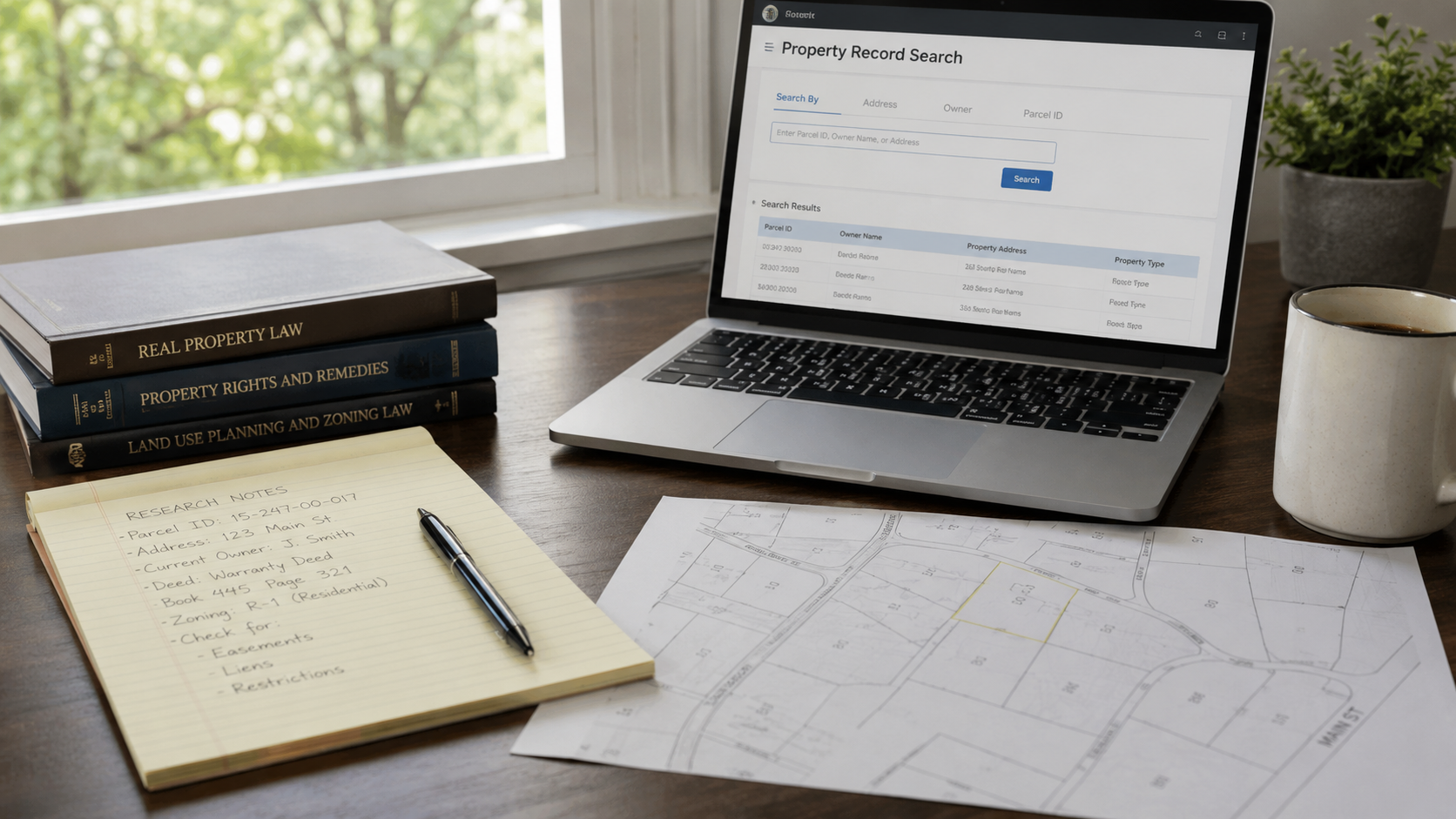
Knowing nothing about adverse possession isn't always what gets people into trouble.
Knowing just enough can be worse.
You learn that adverse possession exists.
You learn your state's statutory period.
You find a property that looks abandoned.
Now you feel like you're ready.
That's the dangerous stage.
Because what you haven't researched yet may matter more than what you already know.
Who is the record owner?
Are they alive?
Did they die?
Was probate opened?
Are there heirs?
Is there an active mortgage?
Has the property been foreclosed?
Are taxes delinquent?
Is there litigation involving the land?
Does a governmental entity have an interest?
Are there tenants?
Is the property actually abandoned—or does it merely look neglected?
Those aren't small details.
Those details may determine whether the property deserves another hour of your attention.
This is one of the biggest lessons I've learned from studying and actually dealing with adverse possession:
Never fall in love with the property before you understand the records.
I Didn't Learn Adverse Possession Overnight
I first learned about adverse possession in 2015.
I didn't immediately go find a house.
I studied.
For years.
I studied adverse possession, property concepts, law, civics and history. At the time, I didn't know exactly how or when I would ever use what I was learning.
Then life happened.
By 2019, my family and I were dealing with our own housing situation.
And that's when years of studying something most people had never heard of suddenly mattered.
I eventually came across property showing obvious signs of neglect.
That property became part of my personal adverse-possession journey.
But here's what people sometimes misunderstand about my story:
Finding the property wasn't the most important part.
The years of preparation beforehand were.
Opportunity doesn't always announce itself and give you six months to prepare.
Sometimes preparation is what allows you to recognize the opportunity in the first place.
That experience is ultimately what led me to create the Adverse Possession Blueprint.
Because when I started, the information wasn't organized the way I needed it to be.
There was one statute here.
A case over there.
A county procedure somewhere else.
A completely different interpretation in another state.
I had to figure out how the pieces connected.
The Blueprint is the resource I wish I had when I started.
"Abandoned" Property Is Not the Same as Ownerless Property
This is important enough to repeat.
A property looking abandoned does not mean nobody has a legal interest in it.
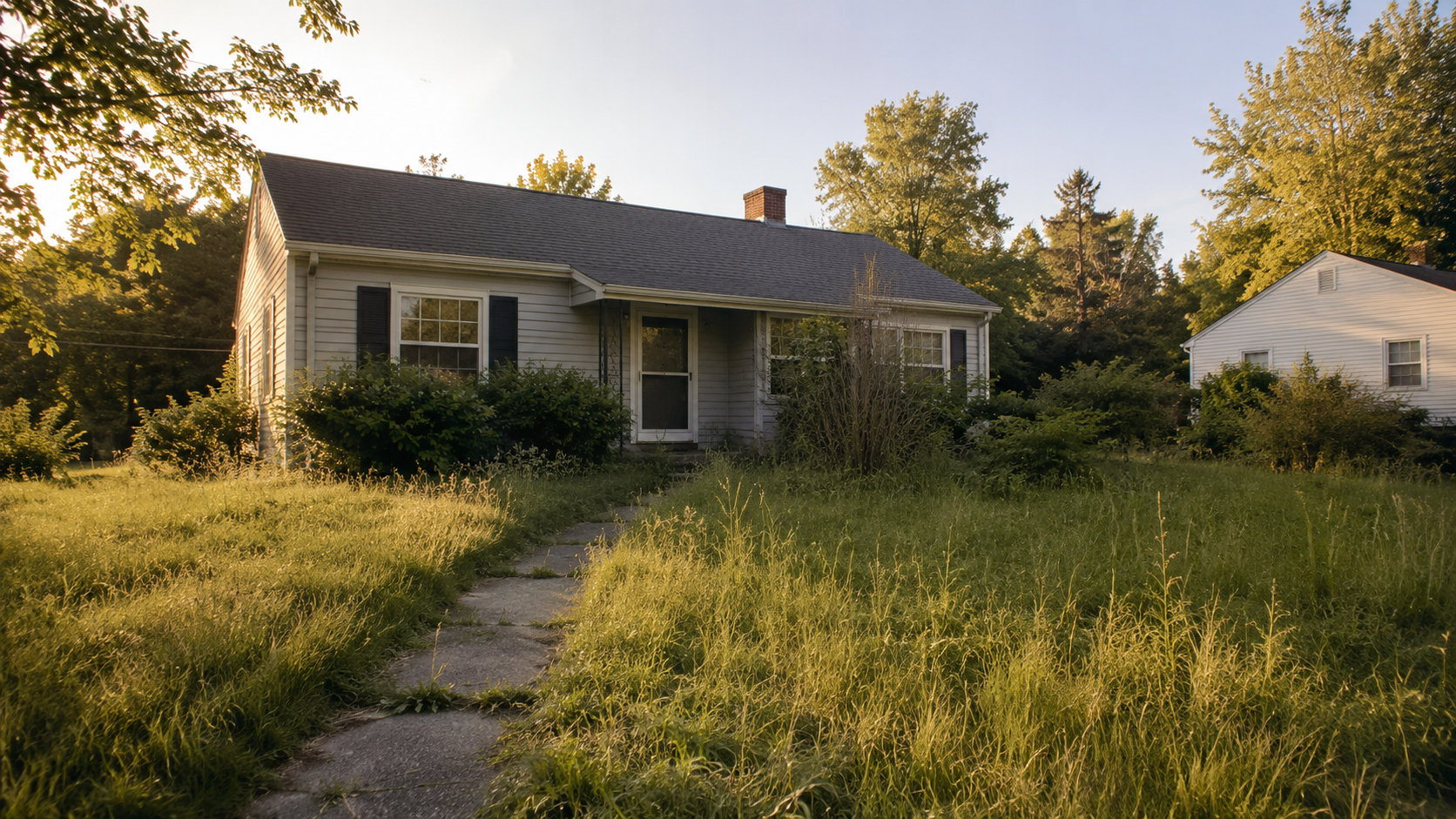
High grass tells you somebody isn't cutting the grass.
It doesn't tell you who owns the land.
A boarded window tells you a window is boarded.
It doesn't tell you whether there are heirs.
Disconnected utilities don't tell you whether a bank has a mortgage.
An overflowing mailbox doesn't tell you whether litigation is pending.
This is why the process should start with investigation, not excitement.
When I evaluate the concept of an adverse-possession opportunity, I am much more interested in the ownership story behind the property than the appearance of the property itself.
The ideal question isn't:
"Does this house look abandoned?"
It's:
"What do the public records tell me about this property?"
That's where strategy begins.
Adverse Possession Is Really an Evidence Game
Here's something I wish more people understood.
A successful legal claim doesn't come down to how strongly you believe something happened.
It comes down to what you can prove.
Imagine a legal dispute arising many years after possession began.
Someone asks:
When did you begin possessing the property?
How do you prove it?
What did you do with the property?
How do you prove it?
Was your possession continuous?
How do you prove it?
Were improvements made?
Receipts?
Photographs?
Invoices?
Witnesses?
Did you pay taxes if your state requires it?
Documentation?
What communications occurred?
Do you still have them?
The smarter way to think about adverse possession is to build the evidence while the facts are happening.
Not years later.
That means potentially maintaining things such as:
photographs;
receipts;
maintenance records;
tax records;
public filings;
correspondence;
utility records where appropriate;
property research;
witness information;
surveys;
legal descriptions;
and a chronological possession log.
Think about it this way:
If the legal standard requires you to prove something years from now, today is when you should start preserving the evidence.
That's not just an adverse-possession lesson.
That's a litigation lesson.
The Most Expensive Mistake May Be Spending Years on the Wrong Property
People tend to focus on losing money.
I'm more concerned about losing time.
Money can be replaced.
Time can't.
Imagine spending five, ten or even fifteen years believing you're building an adverse-possession claim only to discover that something you could have researched at the beginning undermined the entire strategy.
That's brutal.
And unnecessary.
The smartest adverse-possession strategy isn't always finding a way to make the property work.
Sometimes the smartest strategy is recognizing early that the property doesn't work and walking away.
That's why I teach people to ask:
What could defeat this claim?
before asking:
How can I make this claim work?
Beginners look for confirmation.
Strategists look for disqualifiers.
That's a completely different mentality.
Adverse Possession and Squatting Are Not the Same Thing
This is another area where the internet has created unnecessary confusion.
You'll commonly hear people say:
"Squatting is illegal. Adverse possession is legal."
That statement is too simplistic to rely upon.
A person does not become legally protected merely because they say:
"I'm adversely possessing this property."
A future adverse-possession theory does not automatically erase whatever trespass, unlawful occupancy, eviction or other laws may apply to present conduct.
Likewise, simply occupying someone's property without permission doesn't mean someone will ultimately acquire title by adverse possession.
The better question is always:
What does the law require, and do the facts satisfy it?
That's the question serious researchers ask.
And because the laws vary from state to state, a strategy that makes sense in one jurisdiction may make absolutely no sense somewhere else.
This is why copying somebody else's process without understanding the underlying law is dangerous.
A Recorded Document Is Not Magic Either
Another misconception I see is the belief that recording an affidavit or notice automatically creates ownership.
It doesn't.
Recording can be extremely important.
Notice can be important.
Affidavits can be useful evidence.
Public records can help establish a timeline.
But those things need to be understood for what they actually accomplish.
A recorded affidavit may provide evidence of certain facts.
That does not mean the county clerk just transferred somebody else's deed into your name.
Publication may prove that something was published.
That doesn't automatically prove the underlying ownership claim.
A notice may document that you're asserting an interest.
That doesn't necessarily mean a judge has ruled that the interest is valid.
Understanding these distinctions matters.
And this is exactly where people who only learn adverse possession from short videos start getting confused.
They learn one procedural tool and mistake it for the entire process.
This Is Why I Call It a Blueprint
You can research adverse possession yourself.
You should.
I'm never going to tell somebody not to verify information for themselves.
You can read statutes.
Search appellate cases.
Visit county offices.
Study deeds.
Research probate records.
Learn quiet-title procedure.
Study your state's adverse-possession elements.
Figure out recording requirements.
Learn what evidence courts accept.
Research tax rules.
Study local occupancy laws.
And slowly begin connecting all those dots.
That's essentially what I did.
But there's a difference between doing your own research and unnecessarily beginning your research at zero.
That's why I created the Adverse Possession Blueprint.
A blueprint doesn't build the house for you.
It doesn't promise the project will work.
It doesn't eliminate the need to understand local rules.
It shows you how the pieces fit together before you start building.
That's the value.
What Happens After the Statutory Period?

This is another part of adverse possession that doesn't get enough attention.
Let's say someone actually satisfies the requirements of their jurisdiction for the required period.
Now what?
Does a new deed magically appear?
Usually the analysis doesn't end there.
There may still be a need to establish title through a legal proceeding—often involving some form of quiet title action or other procedure recognized by that jurisdiction.
That's where years of documentation suddenly become extremely important.
The court may care about:
when possession began;
how the property was used;
whether possession was continuous;
whether possession was exclusive;
whether it was sufficiently open;
whether it was legally hostile;
whether taxes were required and paid;
whether other statutory conditions were satisfied;
and whether the evidence actually proves those things.
Now imagine trying to reconstruct all of that after the fact.
That's why I keep coming back to the same principle:
Comprehension before action.
You Don't Need More Hype. You Need Better Information.
I understand why adverse possession attracts attention.
Real estate has become increasingly expensive.
Rent isn't getting cheaper.
Homeownership can feel completely out of reach for many people.
So when somebody hears there may be another legal avenue involving property, naturally they're interested.
But excitement can become dangerous if it outruns comprehension.
I'm not interested in convincing you that adverse possession is some guaranteed method for getting a free house.
That isn't what I teach.
I want you to understand:
what the doctrine is;
why it exists;
what makes a property worth researching;
what can destroy a claim;
how state laws differ;
why evidence matters;
what paperwork can and cannot accomplish;
and what the legal path toward recognized ownership may actually involve.
Once you understand those things, you can make intelligent decisions for yourself.
That's far more valuable than hype.
You Can Piece Everything Together Yourself
I did.
But it took years.
And that's really the decision.
Not:
"Can I find this information online?"
Of course you can.
The information exists.
The question is:
How much time do you want to spend figuring out what matters, what doesn't, and how everything connects?
That is where the Adverse Possession Blueprint becomes valuable.
I've taken the lessons, research framework, legal concepts, mistakes, documentation strategies and practical tools that took me years to understand and organized them into one place.
The package includes the Adverse Possession Blueprint — Second Edition, along with practical checklists, templates, examples and supporting resources designed to help you understand the process more intelligently from the beginning.
Not because a template makes you an owner.
Not because an ebook guarantees a claim.
But because starting with a framework is better than starting confused.
Start With Knowledge Before You Start With Property
If you've been searching:
What is adverse possession?
How does adverse possession work?
What are the adverse possession laws in my state?
Can adverse possession really lead to ownership?
then you're already doing the right first thing.
You're researching.
Keep going.
But understand that the biggest danger isn't that adverse possession isn't real.
It is.
The danger is believing that because you understand the basic idea, you understand the process.
Those are two completely different things.
I've spent years studying this subject and I've personally experienced how different the theory looks once real property, real government offices, real records and real legal questions enter the picture.
That's why I built the resource I wish I had at the beginning.
The Adverse Possession Blueprint
If you're serious about learning the process, stop trying to assemble your entire education from random searches, short videos and disconnected pieces of information.
Start with a framework.
Learn the law. Learn the property. Build the evidence. Then determine the strategy.
That's the Blueprint.
Get the Adverse Possession Blueprint and start with knowledge before you ever start with property.
